Server host
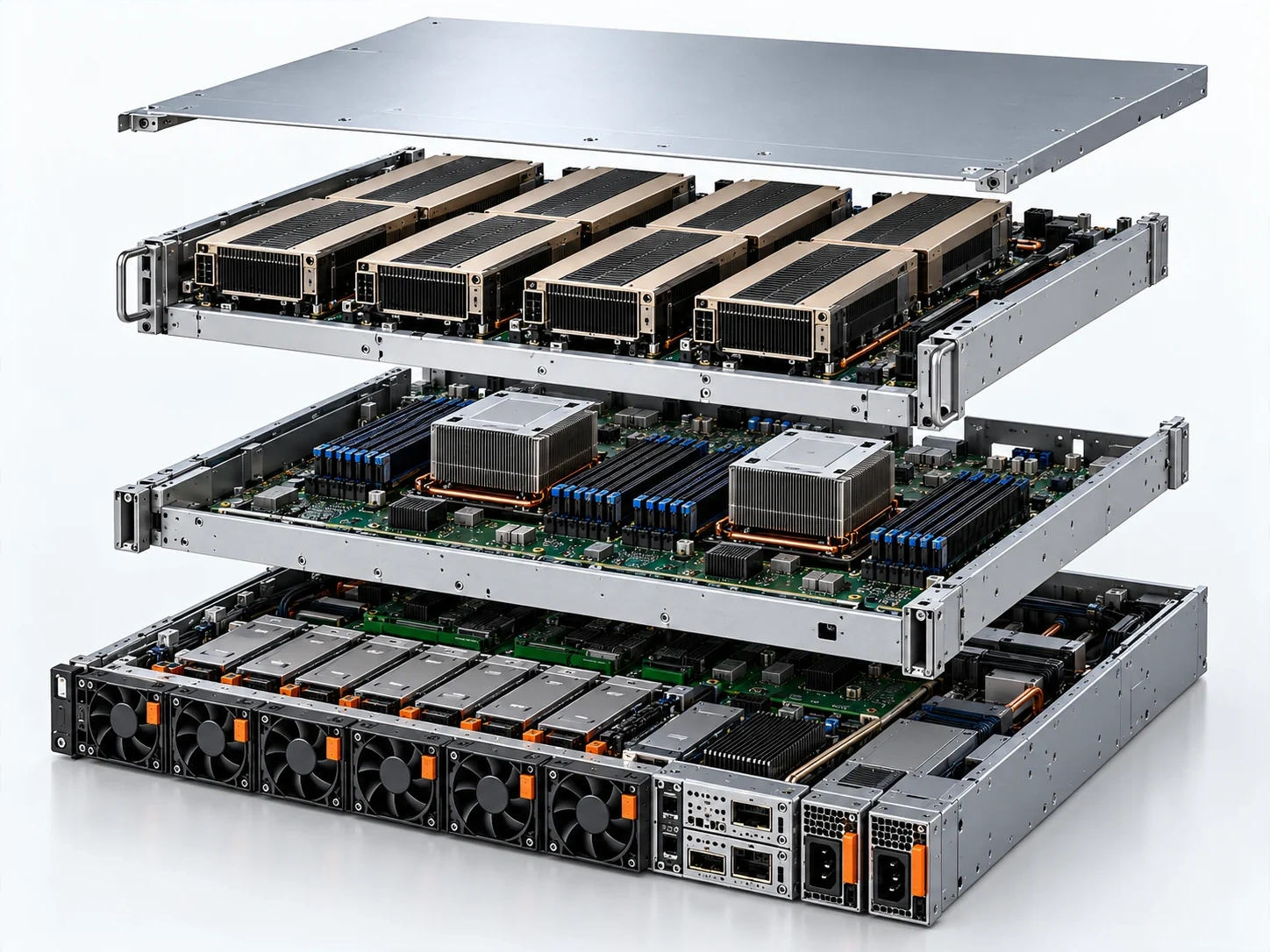
Server CPUs and appropriately populated host memory support the accelerator workload.


Cloud 9 sources and supplies multi-GPU server platforms built around Intel Xeon or AMD EPYC hosts and NVIDIA or AMD accelerators. Explore PCIe and integrated accelerator platforms for a dedicated node or a defined multi-node deployment.
01 / THE PLATFORM
An AI server node brings the accelerators, host processors, memory, storage and connectivity into one specified machine. The important question is how those resources work together for the application and the operating environment.
Cloud 9’s node scope centres on server-class Xeon and EPYC platforms, including dual-socket, multi-GPU configurations. PCIe cards offer a different physical and communication arrangement from integrated SXM or OAM accelerator platforms. Neither format is a substitute for checking the complete system.
Server CPUs and appropriately populated host memory support the accelerator workload.
Card-based and integrated module platforms require their own compatible system design.
GPU links, host I/O, local storage and external networking serve different paths.
Cooling, power, management and service access determine how the node fits its environment.
02 / PLATFORM ARCHITECTURE
Select a node-platform family to explore its accelerator arrangement, memory, interconnect and complete-system requirements.
GPU memory totals are the sum of separate device memories. Model distribution and usable capacity depend on the software and workload.
Choose a platform
NVIDIA
AMD
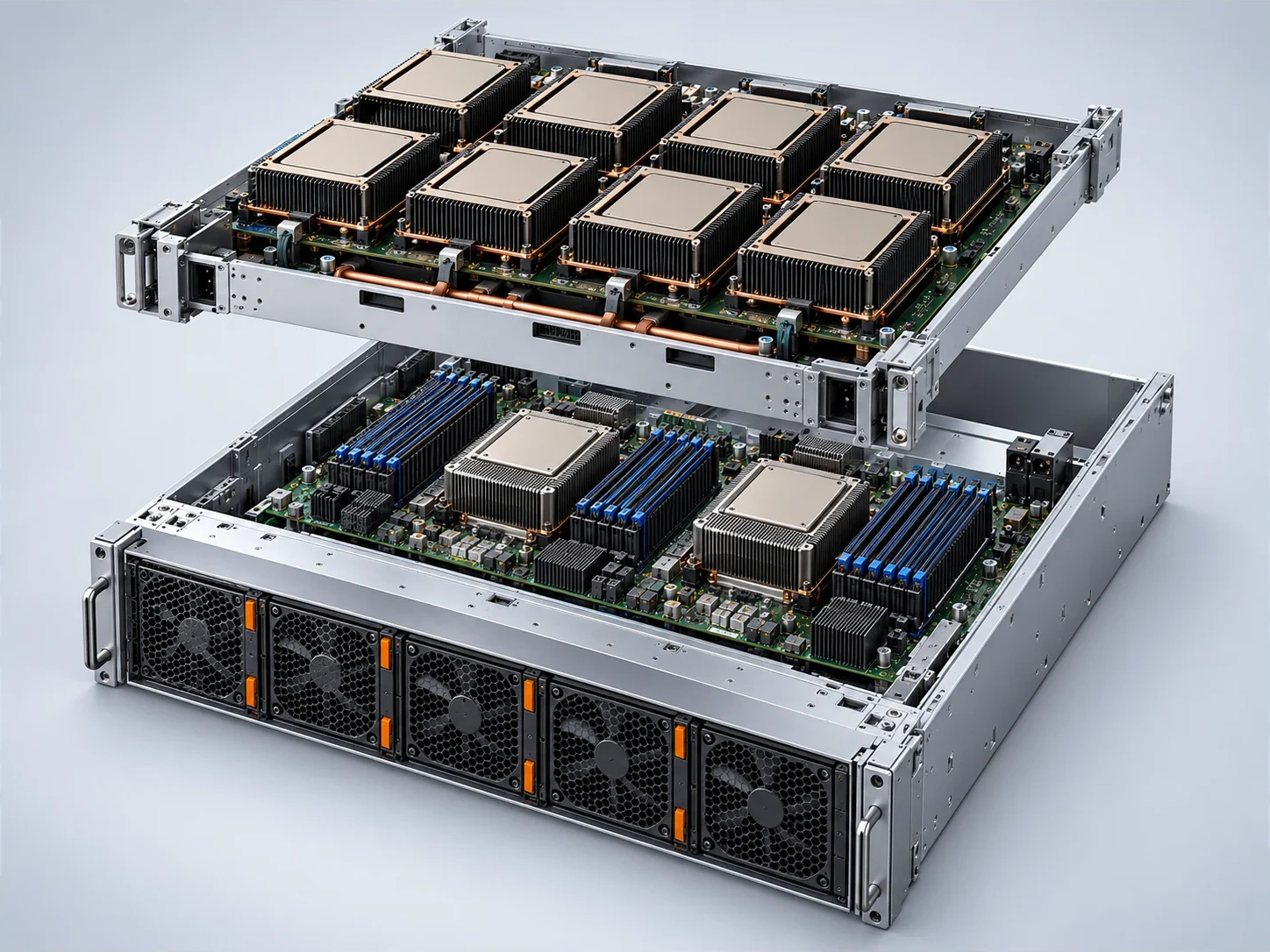
HGX B200 baseboard with eight SXM GPUs. Blackwell acceleration in a complete HGX-based server node.
SELECTED PLATFORM
Eight-SXM baseboard
Blackwell acceleration in a complete HGX-based server node.
Configuration and supply are confirmed against the selected system.
View complete-node context03 / WORK AND DEPLOYMENT
Workload families and deployment priorities for dedicated AI nodes. The selected application determines the accelerator, software and operating requirements.

Foundation-model training and post-training
Build training and post-training environments around the model, precision, dataset and expected iteration time. The node must accommodate activations, optimiser state, checkpoints and communication as well as model weights.
A single node supports workloads within its memory and runtime constraints. Larger distributed runs require a defined multi-node environment.

Large-model inference and model serving
Plan GPU memory around the model, context length, KV cache and simultaneous requests. Depending on the application, a node can host independent replicas or divide a supported workload across multiple accelerators.
Capacity and throughput depend on the named model, context, serving runtime and concurrency target.

Agentic AI and multi-model orchestration
Agentic applications combine model execution with retrieval, tool calls, code execution and state. GPU resources support inference while server CPUs, host memory, storage and networking support the surrounding workflow.
Agent capacity depends on inference, tool execution and data access as well as GPU resources.

AI-enhanced scientific computing and HPC
Support simulation, scientific data processing and AI-assisted analysis with an accelerator selected for the application. Required numeric precision, validated libraries and data movement are as important as headline AI throughput.
Required numeric precision and application support govern accelerator choice. Low-precision AI throughput alone does not determine scientific-computing suitability.

Physical AI, digital twins and advanced simulation
Use supported node configurations for synthetic data, robotics simulation, industrial digital twins and visual-computing pipelines. The graphics or simulation requirements determine whether an RTX-capable server or a compute-only accelerator is appropriate.
Graphics and simulator support are platform-specific. An RTX-capable server and a compute-only accelerator serve different requirements.

Private AI, sovereign AI and controlled on-premises deployment
A dedicated node can support AI services within a chosen operating environment. Data location, access, network isolation, software provenance and operational responsibility are determined as part of the deployment.
Data control also depends on the software, network and operating policies. Dedicated hardware alone does not establish compliance or sovereignty.
04 / DEDICATED OPERATION
Move to a server node for a defined operating requirement, not simply because it contains more GPUs.

Choose a dedicated node when workloads need a managed shared resource, scheduled access or an independently operated server platform. A faster workstation is still the right answer for some individual workflows.
Evaluate concurrency, service targets and repeated runs rather than a single demonstration. Memory per accelerator, data preparation and the serving strategy influence useful capacity.

Additional nodes need a deliberate network, storage and scheduling design. Those connections determine how separate machines can support a distributed workload.
Power inputs, cooling connections, remote management and service access must fit the intended location. Redundant components and monitoring do not by themselves create application-level high availability.
THE COMPLETE AI SERVER NODE
The selected accelerator establishes part of the capability. The host, data paths and operating environment determine how that capability can be used. Cloud 9 considers those choices as a complete node specification.

Selected platform
The B200 baseboard, host platform, network adapters, power supplies and cooling assembly are specified as one complete node.
Change platformUse the supported Intel Xeon server or AMD EPYC platform, with memory population and CPU-to-GPU attachment matched to the selected accelerator layout.
Identify PCIe cards or an integrated module platform, the GPU count and the supported peer-interconnect domain. Keep that topology distinct from network scale-out.
Size boot, scratch, dataset and checkpoint storage against the workflow. Capacity, endurance and the external data path belong in the same discussion.
Separate client traffic, storage access, inter-node communication and management. Link speed and RDMA capability apply to a defined adapter and network configuration.
Confirm the node’s electrical input, thermal solution, physical depth and maintenance access. Facility-side work and cooling equipment are not included unless agreed.
Establish firmware, remote-management access, drivers and the supported CUDA or ROCm environment. Licences, installation and ongoing operation are confirmed separately.
Configuration, availability and supply scope are confirmed against the selected node and deployment requirements.
Contact Cloud 9