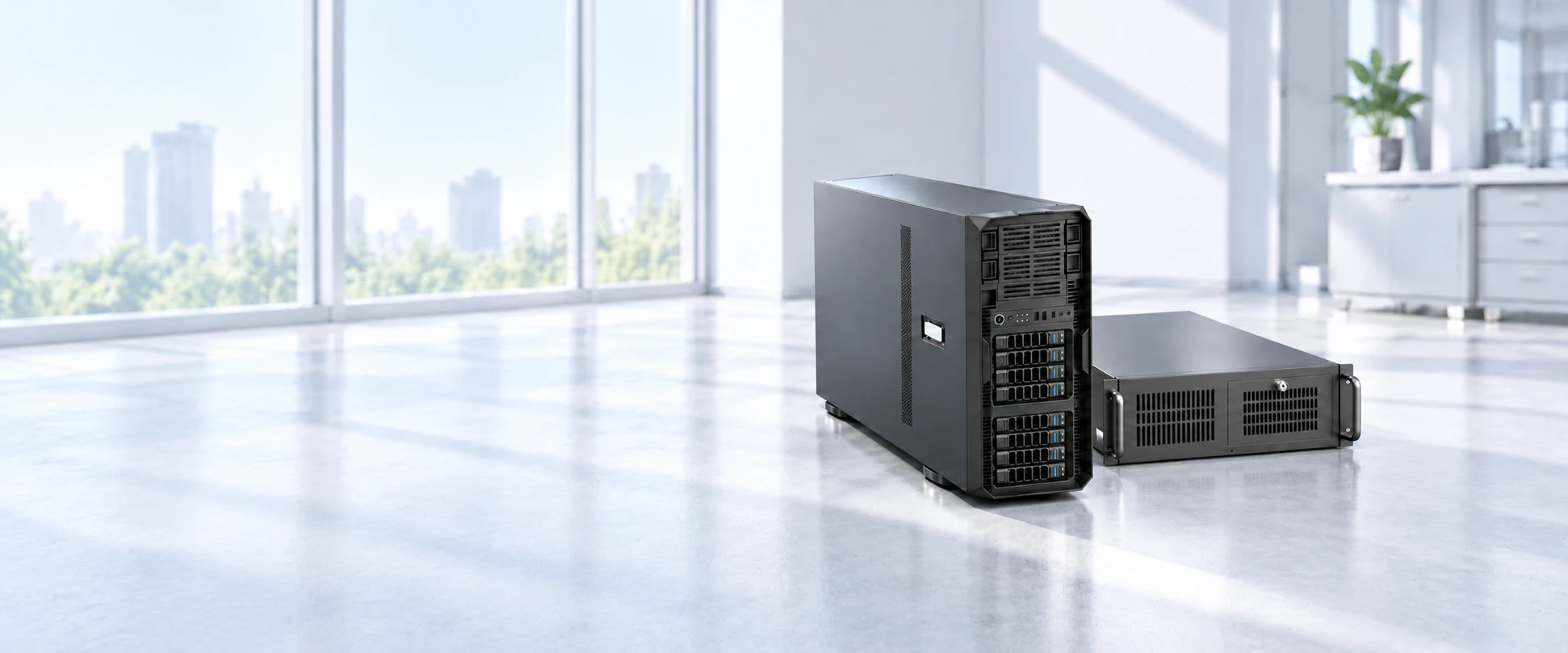
Convertible pedestal chassis and distinct dedicated rackmount chassis on a light studio surface.

Chassis engineered for demanding AI computing.

Cloud 9 supplies convertible pedestal/rack and dedicated rackmount chassis for advanced workstations, GPU-intensive systems and storage-focused configurations. Accessible drive bays, planned airflow and appropriate power arrangements make the enclosure part of the complete system design.

The enclosure's role

The enclosure shapes the complete system.

Processor, graphics, memory and storage all place different demands on a workstation. The enclosure determines where those resources fit, how they are cooled and how they can be accessed when the configuration changes.

Cloud 9’s chassis selection includes a convertible pedestal/rack format and a dedicated rackmount design. Both are intended for demanding computing, while their storage, expansion and installation arrangements serve different needs.

The approach is straightforward: select the enclosure around the intended system, then plan the drive access, motherboard, graphics, power and cooling as one physical arrangement.

Chassis families

Two chassis designs for different installation requirements.

The choice begins with where the system will operate and how the hardware needs to be accessed. Both families support serious workstation applications, but their physical arrangements are different.

Convertible

Convertible Pedestal / Rack

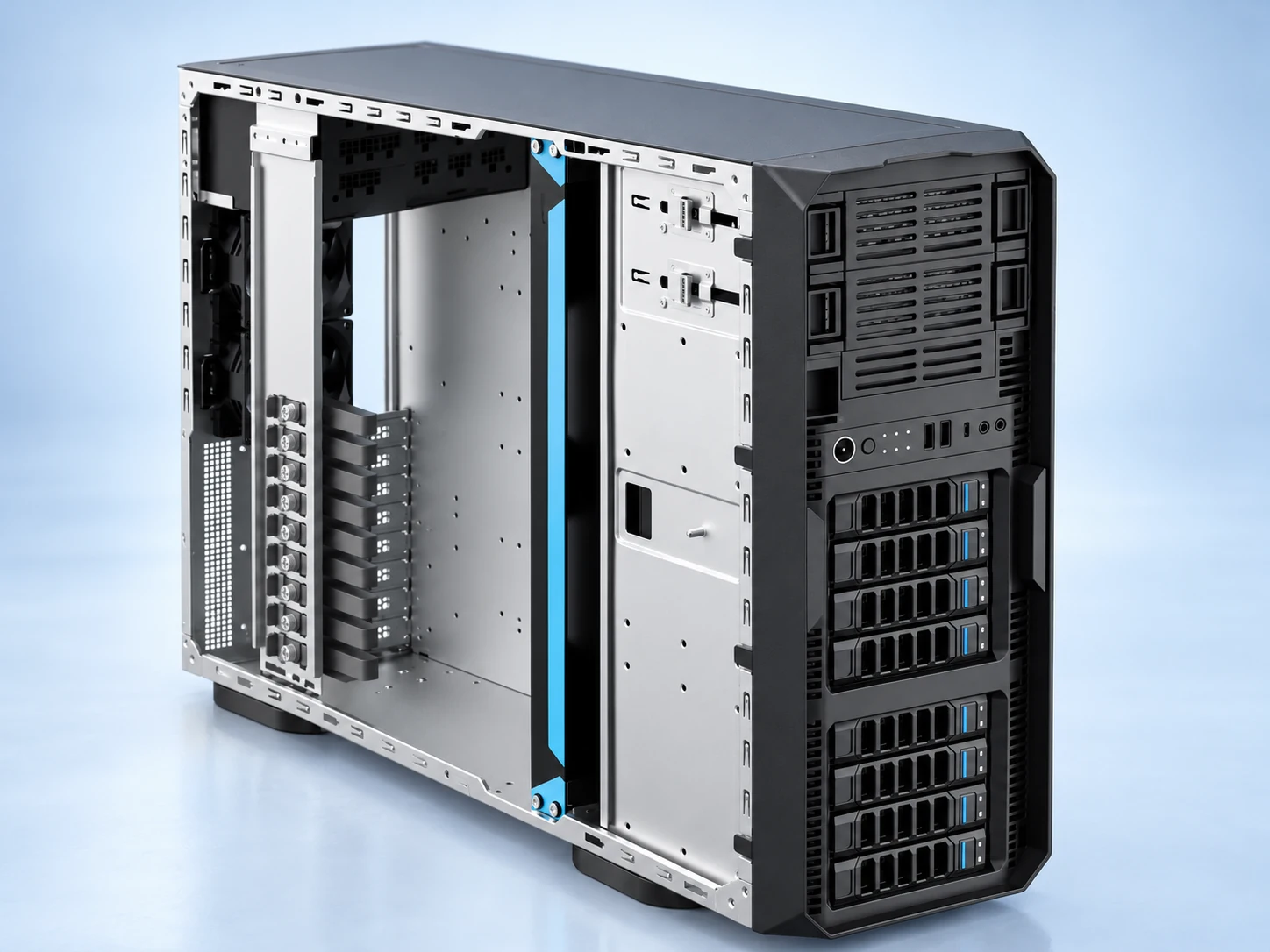
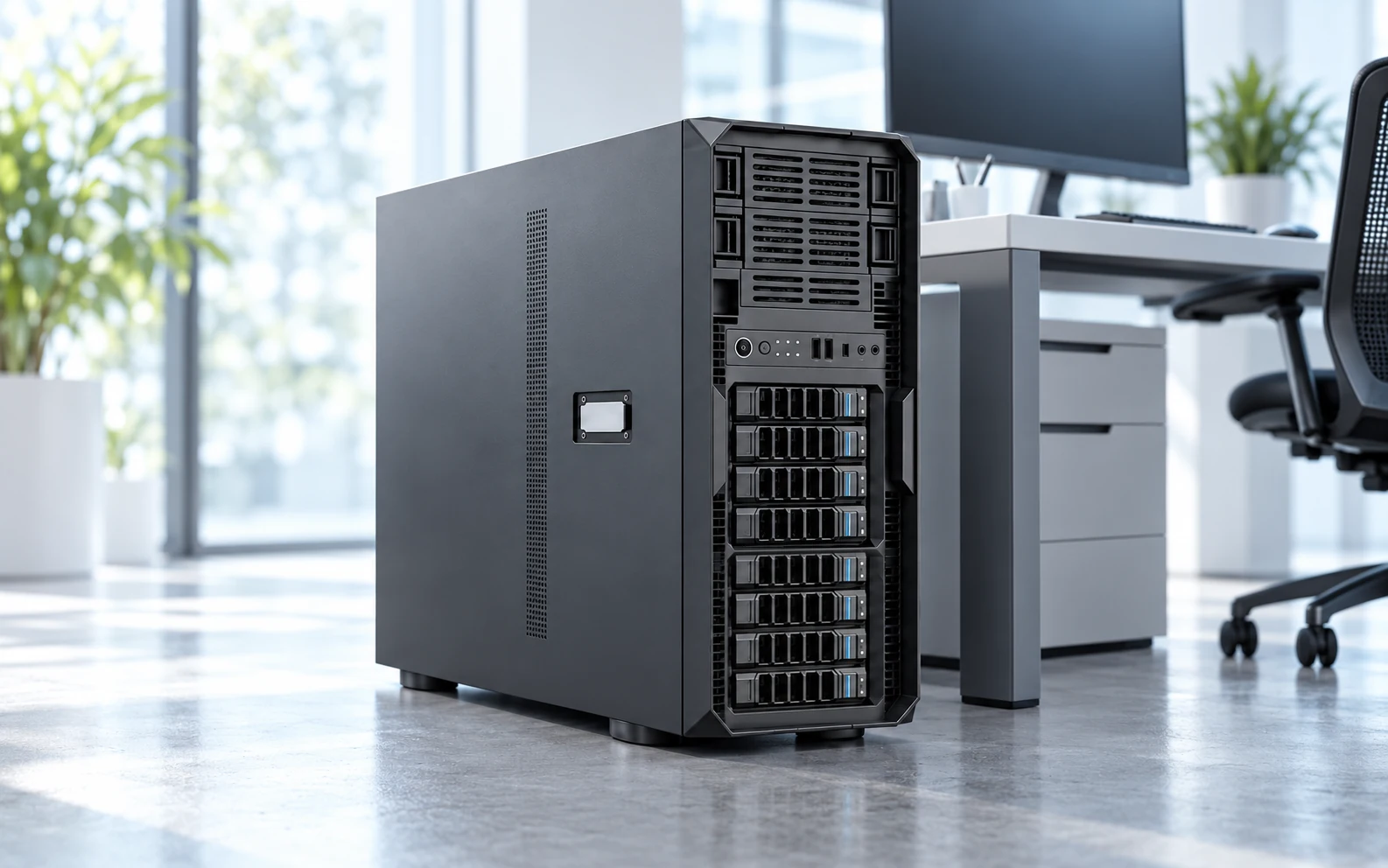
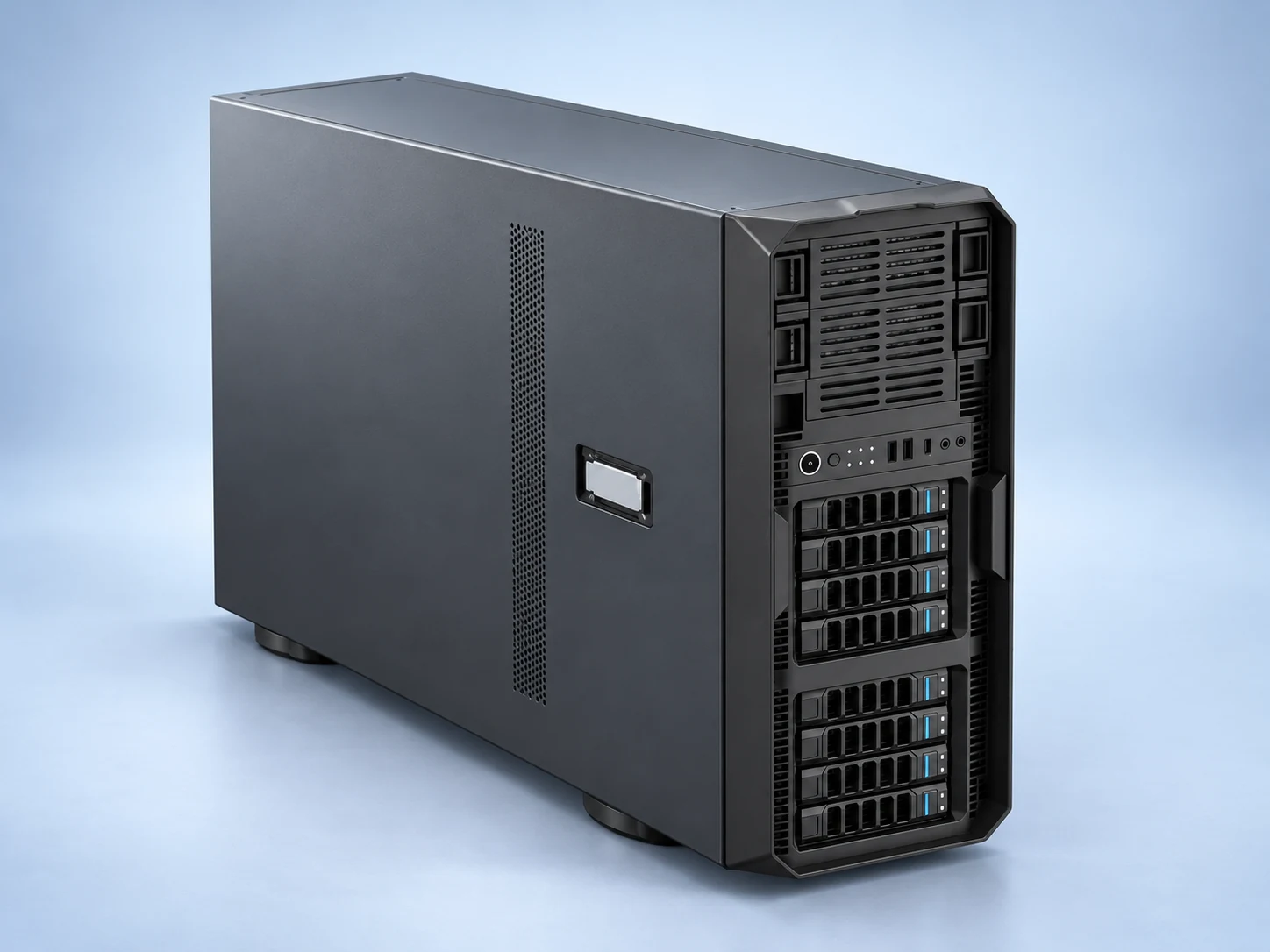
One enclosure, two installation formats. The convertible chassis can stand as a pedestal workstation or be configured for a compatible rack installation. Its supplied eight-bay hot-swap arrangement gives it a useful role in storage-intensive AI builds, alongside its workstation hardware capacity.

  • Pedestal or compatible rack installation
  • Eight 3.5-inch front hot-swap bays on the reference configuration
  • ATX or 1+1 CRPS power options
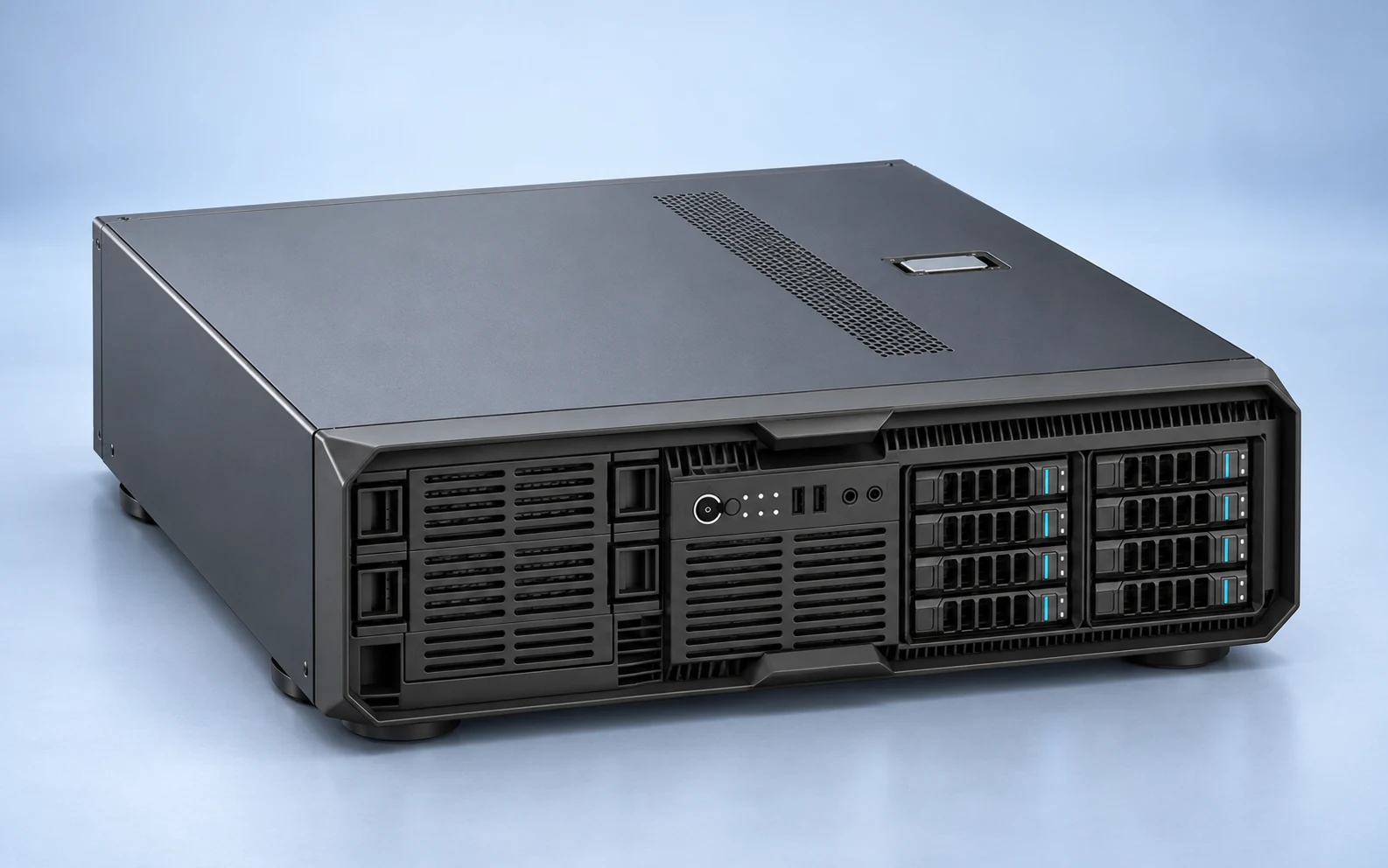
Dedicated rackmount chassis exterior with wide vent fields and front service handles.
Separate rack-first family; internal layout depends on the chosen variant.
Rack first

Dedicated Rackmount

A rack-first enclosure for dedicated workstation and high-density GPU applications. The planned range accommodates storage-focused builds with up to ten drive bays and configurations involving multiple GPUs, with exact hardware fit determined by the selected platform and cooling arrangement.

  • Rack-first mechanical design
  • Up to ten drive bays
  • Intended for up to eight compatible GPUs, configuration dependent
Accessible storage

Storage that stays accessible.

AI workloads draw on model files, datasets, project assets and intermediate results. Keeping suitable working storage close to the computing hardware can simplify how those resources are organised and serviced.

Source-led illustrative W800 front-access drive cage and eight-bay hot-swap storage region.
Convertible chassis reference configuration: eight front-access 3.5-inch bays. Actual interface and backplane support follow the build.

Drive access begins at the front.

The convertible chassis provides eight front-access 3.5-inch hot-swap bays. The dedicated rack family is planned for up to ten drive bays. These arrangements create options for data-heavy workstations and storage-focused builds without requiring a separate storage product category.

Drive type, backplane, controller and operating-system support are selected as part of the actual build. Hot-swap capability is configuration dependent; the chassis alone does not establish universal support for every drive interface.

Front-access drive modulesWorkstation and data storage in one enclosureModel-dependent backplane and drive support
Storage-intensive convertible workstation chassis in a bright technical workspace.
Airflow and cooling

Cooling planned around the installed hardware.

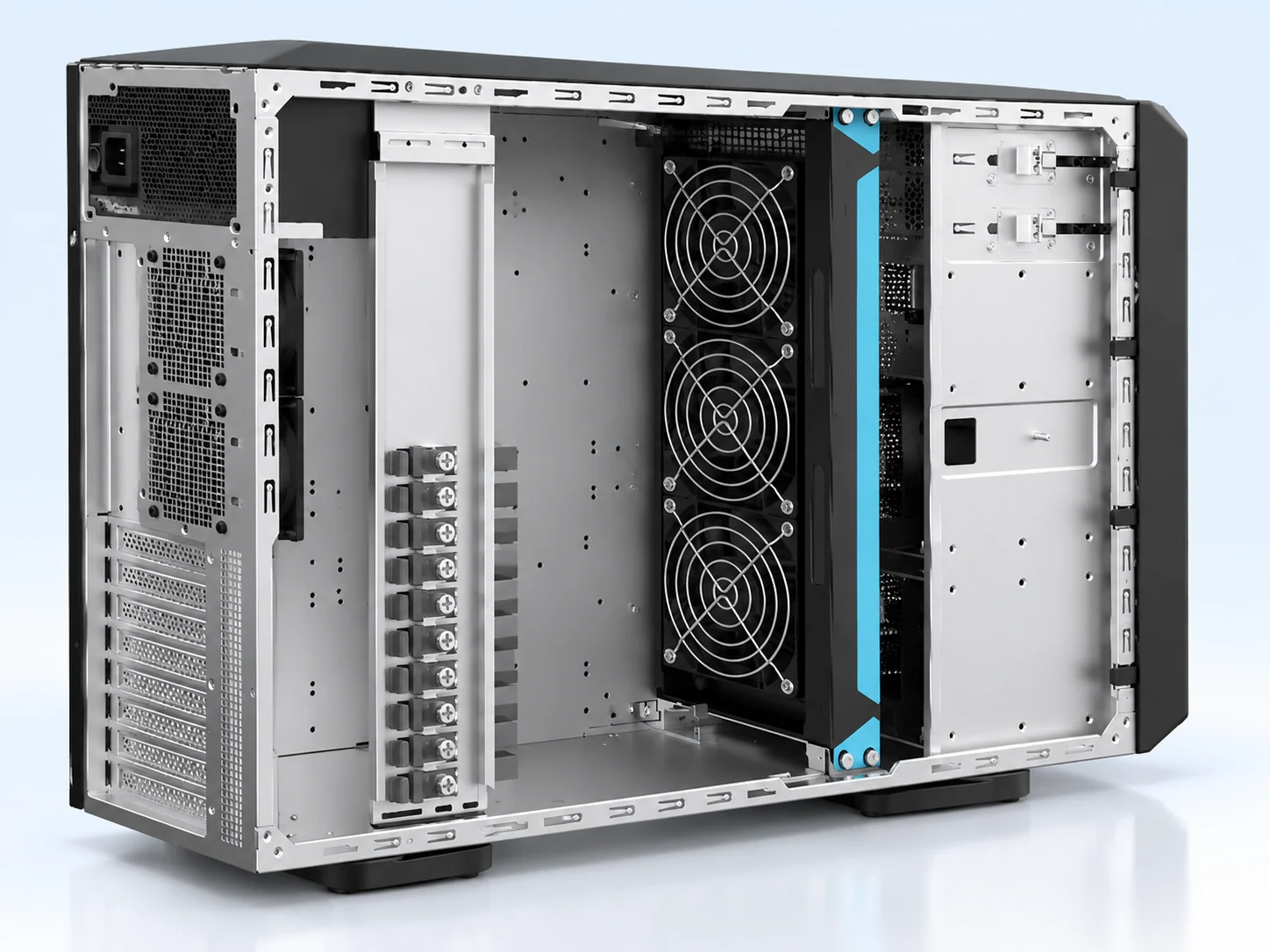
Sustained GPU and processor workloads place demanding requirements on the space inside the chassis. Drive modules, expansion cards, power supplies and cable routes influence the airflow that can reach the installed components.

Illustrative W800 interior showing a central fan region, drive cage and motherboard zone.
Airflow and fan placement follow the selected chassis and cooling configuration.
Air

Plan an open air path.

Fan placement is considered around the selected hardware and chassis arrangement. Final fan population, card clearance and thermal suitability are assessed for the chosen system.

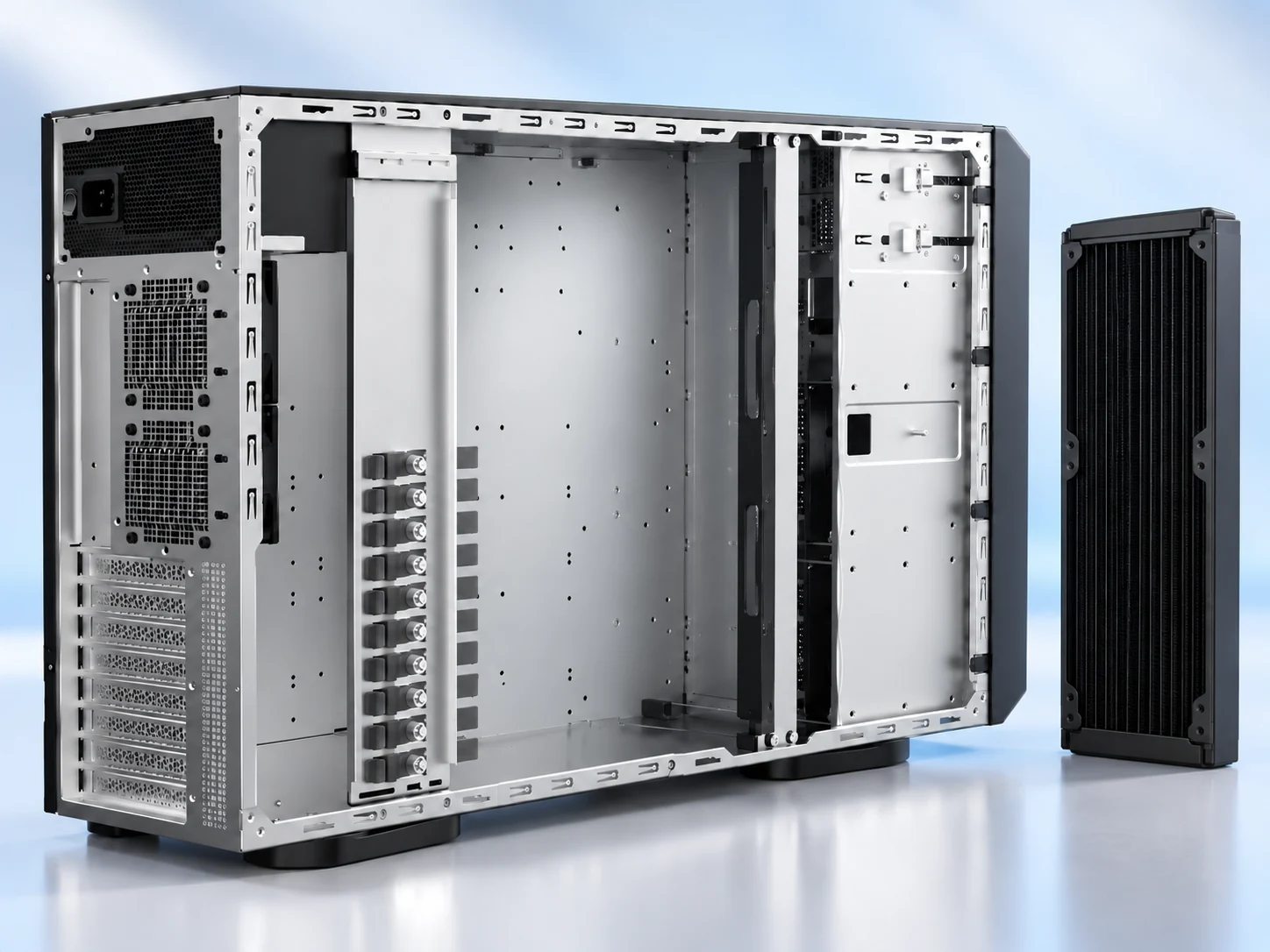
W800 chassis and a separate conceptual optional radiator alternative shown without installed liquid plumbing.
Optional compatible 360 mm radiator concept, shown as an alternative arrangement rather than included equipment.
Optional liquid

Keep alternatives compatible.

The convertible chassis lists a compatible 360 mm radiator arrangement as an alternative to the central fan layout. Air and liquid cooling are configuration choices, not performance guarantees.

Compatible liquid cooling can be explored where the final build supports it. Radiator fit, cooling scope and remaining chassis airflow are reviewed together.

Complete system fit

Designed to accommodate the complete build.

A chassis earns its place in a configuration by accommodating the host platform, GPU arrangement, storage modules and power hardware without undermining access or cooling.

Illustrative open W800 chassis envelope with board, expansion, power, storage and service regions visible.
W800 configuration concept.

Motherboard and host platform

The convertible chassis is specified for ATX, E-ATX, CEB and EEB motherboards. The dedicated rack family is currently confirmed through SSI-CEB; other mounting patterns remain variant-specific.

GPU and expansion

The convertible chassis provides eight full-height/full-length expansion slots; installed GPU count depends on card width, slot layout and cooling. The dedicated rack chassis is intended for up to eight compatible cards in an engineered configuration.

Power arrangements

The convertible chassis supports ATX or 1+1 CRPS power-supply configurations. Other chassis power options will be published when confirmed.

Service and cooling access

Front-access drives, removable panels and appropriate air or liquid cooling arrangements support different build and maintenance needs.

The right enclosure starts with the system it needs to become.

A compact workstation, a storage-intensive development platform and a high-capacity rack system place different demands on their chassis. The right choice brings the computing hardware, drive access, power and cooling arrangement into one considered design.

Cloud 9 supplies chassis options to support those different system requirements, with the final configuration determined around the hardware and its intended environment.

Explore AI Systems