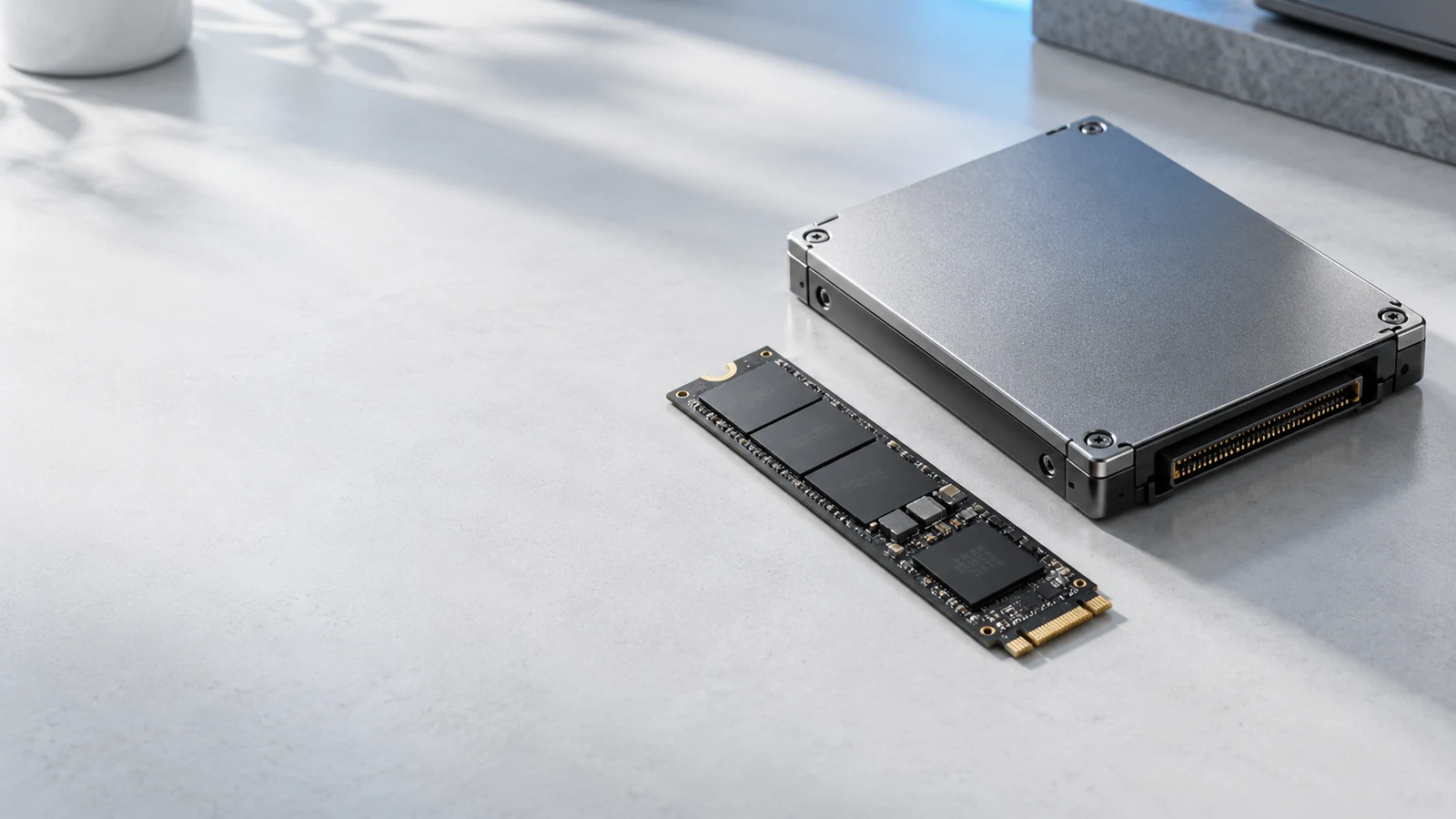
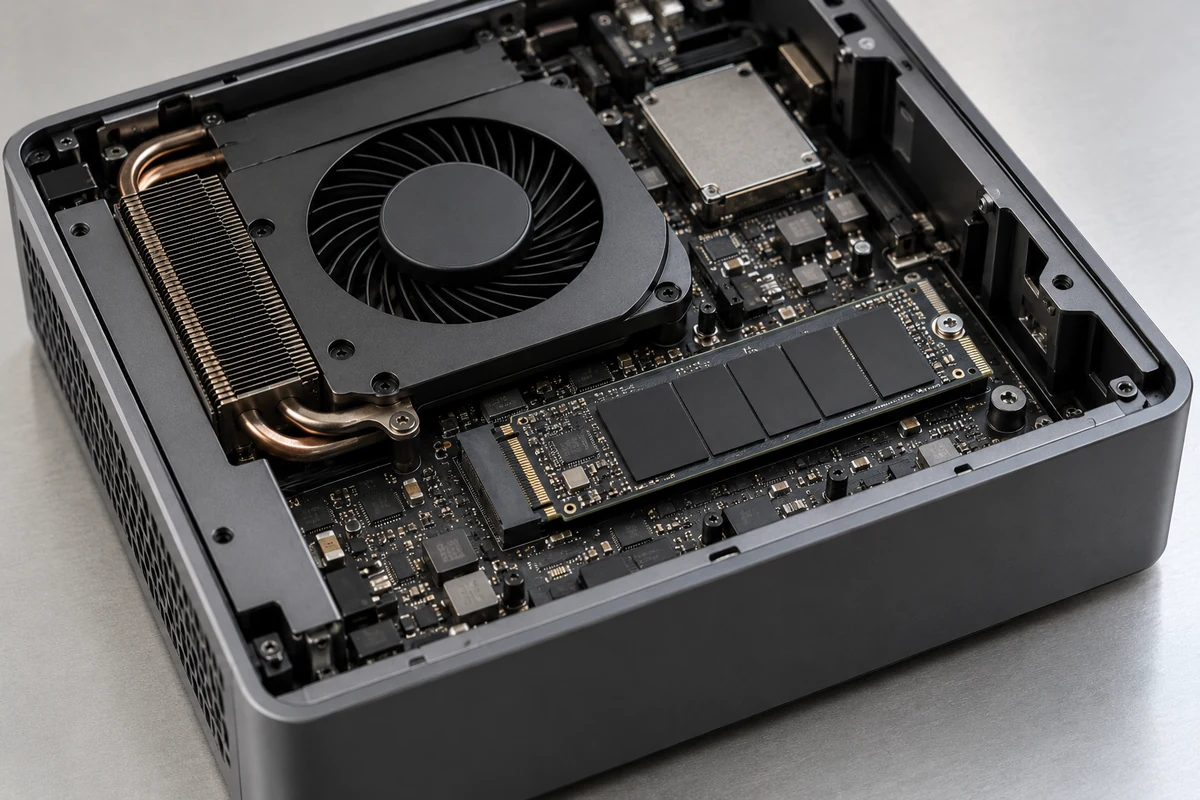
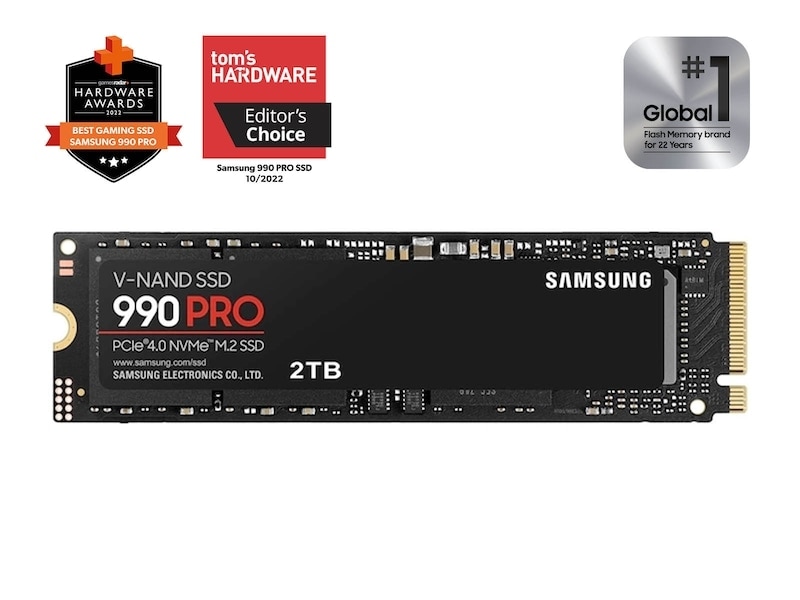
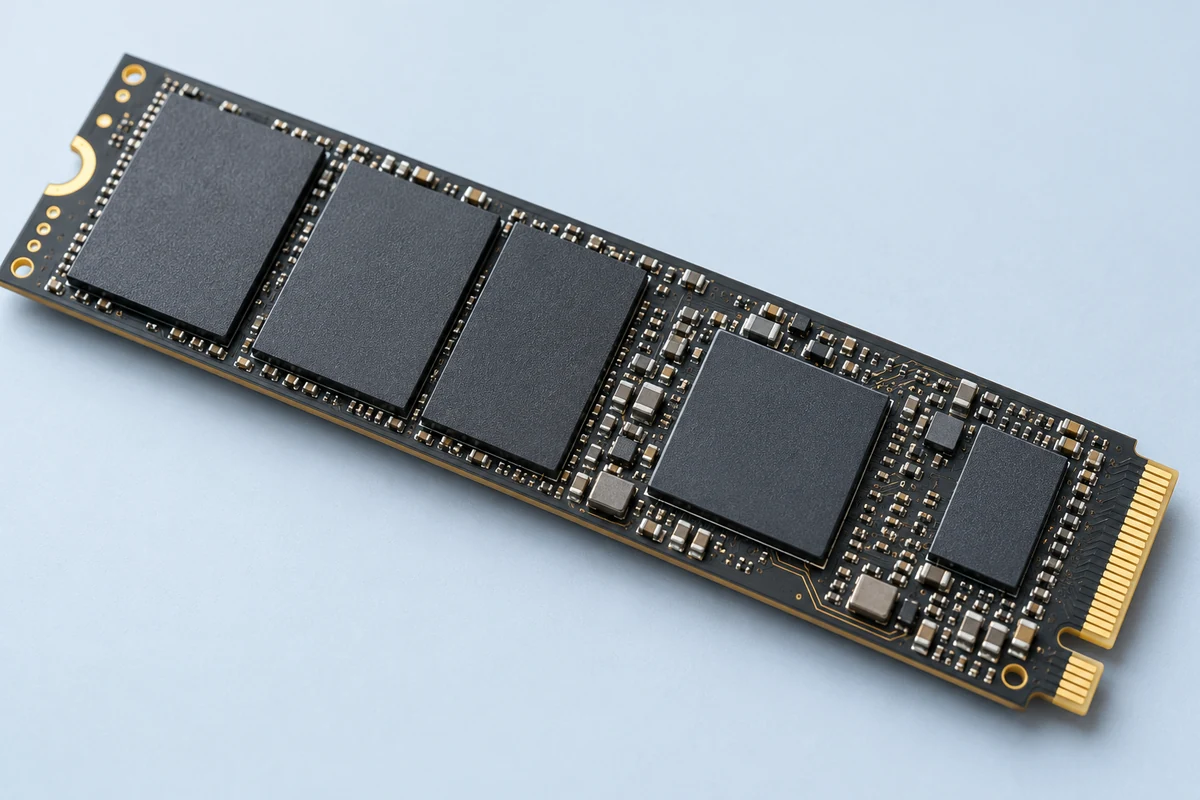
High-throughput solid-state storage for working datasets, model libraries, applications and checkpoints. Cloud 9 sources commercial and enterprise-class NVMe storage in compact M.2 and server-focused formats.
Keep working data close to the compute.
The GPU is only one part of an AI system. Models, training data, checkpoint files, application environments and created content all need space, and much of that material must be accessed and moved repeatedly.
NVMe SSDs connect through PCIe to support responsive access and substantial transfers. They can reduce waiting when storage is the limiting part of the work, whether that means preparing a dataset, loading a model or saving the progress of a training run.
Cloud 9 supplies NVMe storage for compatible workstation and server platforms, as an upgrade component or part of a complete hardware configuration. The right choice depends on the actual application, drive form factor, capacity and operating requirements.
Inside an NVMe SSD.
Select a format to examine the hardware behind NVMe storage. The browser explains controller, NAND, optional DRAM, power protection and thermal design, with components shown only where the illustrative design supports them.
Scroll to see all six formats.
Mainstream M.2
M.2 2280
22 × 80 mm
A widely used M.2 format for both client and selected enterprise designs; internal cache architecture depends on the model.
Explore the design
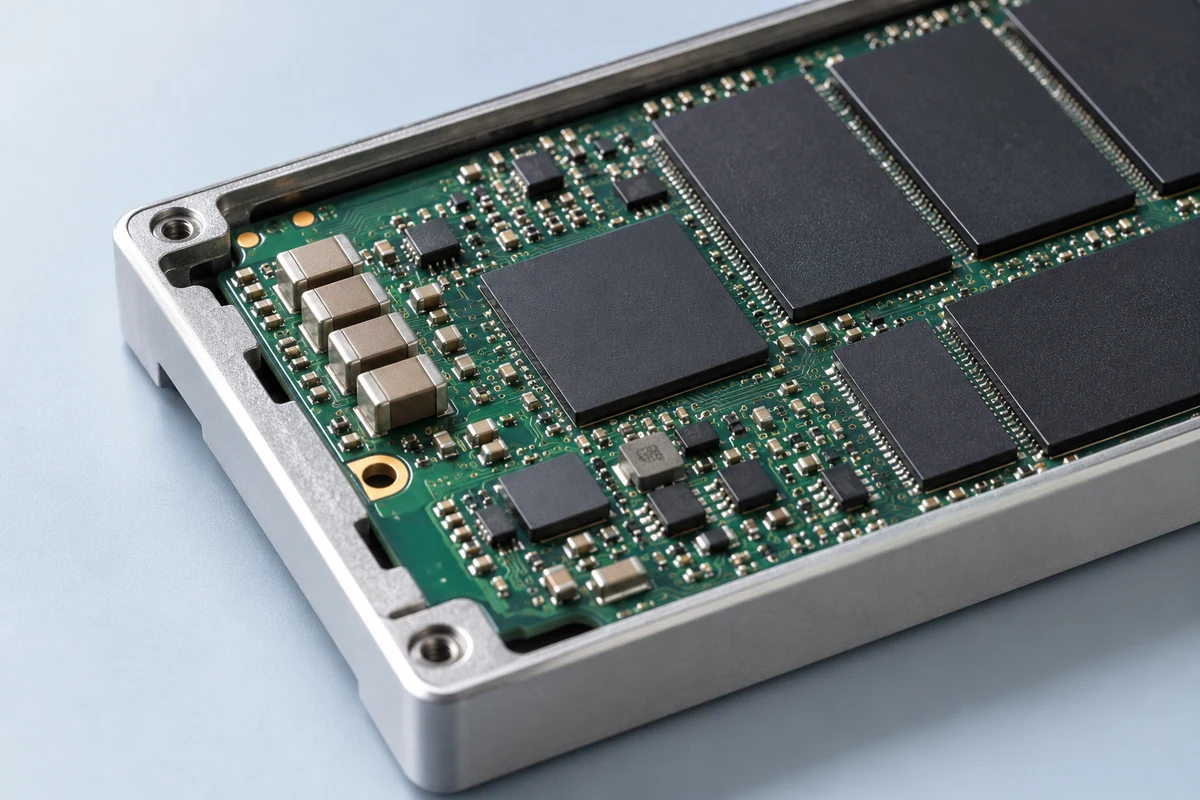
SSD controllerManages how NAND is read, written and maintained. Controller and firmware design affect sustained behaviour.
NAND flashNonvolatile storage for data. Flash type and endurance depend on the exact drive.
DRAM cache, where fittedAn onboard volatile memory package in this illustrative design. Other drives can be DRAM-less.
Host interfaceThe connector must match the host slot, bay or backplane; physical format alone does not ensure compatibility.
Thermal arrangementHeat spreading and installation airflow affect sustained operation.
Host Memory Buffer is host-sideOn compatible DRAM-less designs, part of host system memory may support drive management. HMB is never an extra chip on the SSD.
NVMe drive characteristics depend on the selected model, including capacity, speed and protection features.
All six formats at a glance
M.2 2242 22 × 42 mm
Compact NVMe storage for compatible short-board positions; board space and thermal limits matter.
M.2 2280 22 × 80 mm
A widely used M.2 format for both client and selected enterprise designs; internal cache architecture depends on the model.
M.2 22110 22 × 110 mm
Extra board length accommodates selected enterprise layouts, but does not by itself guarantee greater performance.
U.2 2.5-inch drive, model-specific thickness
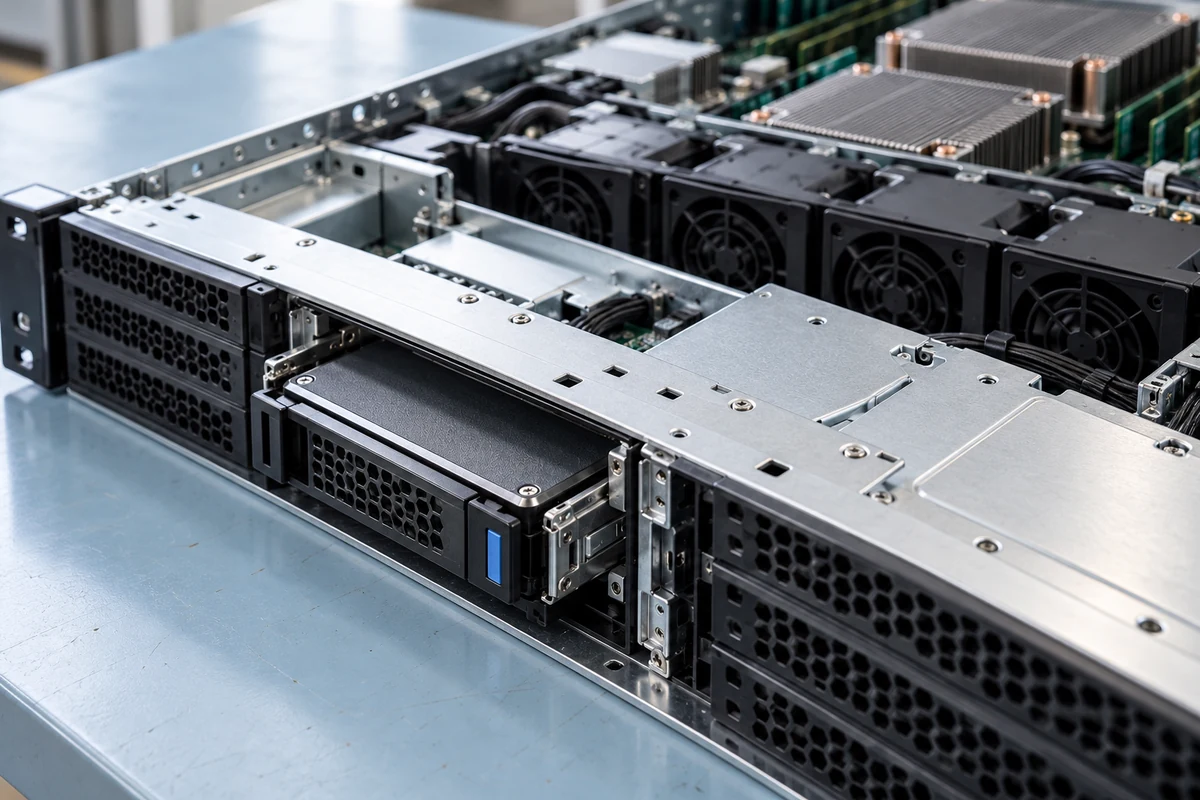
Enclosed 2.5-inch server-format NVMe drives, selected against compatible bays, backplanes, power and cooling.
E1.S EDSFF short form factor; thickness variant-specific
A slim enterprise SSD form factor with specific thickness and cooling options for compatible server enclosures.
E3.S EDSFF E3 short form factor
Server-oriented EDSFF storage where mechanical fit, thermals, capacity and endurance are selected together.
Choose the NVMe drive around the duty.
Commercial and enterprise NVMe drives can use the same underlying flash-storage principles. The important difference is how each product is qualified for its capacity, write workload, sustained behaviour, data protection and host platform.
Indicative proposed NVMe range envelopes
Class
Form factor
Capacity
Interface
NAND
DRAM cache
Power-loss protection
Commercial NVMe
M.2 2242 / 2280 (22110 subject to range approval)
512 GB–4 TB across proposed family; not every length
PCIe Gen4/Gen5 x4, model-specific
3D TLC or other confirmed class
Model-dependent; HMB may apply
No assumed hardware PLP
Enterprise NVMe
M.2 2280 / 22110
480 GB–3.84 TB in referenced family
PCIe Gen4 x4 on PJ1 reference
3D eTLC on reference
Included on referenced PJ1 models
Hardware/firmware by exact variant
Enterprise NVMe
U.2
Up to 15.36 TB in referenced EJ5 family
Gen4 or Gen5 x4, model-dependent
3D eTLC on EJ5
Included on referenced EJ5
Hardware + firmware on referenced EJ5
Enterprise NVMe
E1.S
Up to 7.68 TB in referenced PJ1 family
PCIe Gen4 x4 on PJ1 reference
3D eTLC on PJ1
Included on referenced PJ1
Hardware + firmware on referenced PJ1
Enterprise NVMe
E3.S
Up to 3.84 TB in proposed first Cloud 9 selection; supplier family offers larger
PCIe Gen5 x4 on EJ5 reference
3D eTLC on EJ5
Included on referenced EJ5
Hardware + firmware on referenced EJ5
Capacity, PCIe generation, DRAM, power-loss protection and security features vary by model. The proposed initial E3.S selection extends to 3.84 TB; this is a selection limit rather than the form factor’s capacity ceiling.
Sequential read/write figures and random IOPS can vary substantially by capacity, controller, firmware and test conditions. Check exact manufacturer data for the selected SSD; peak figures are not whole-application benchmarks.
The details that change a storage decision.
NAND, controller and firmware.
The NAND stores the data; the controller manages how it is read, written and maintained. TLC and QLC offer different density and endurance trade-offs, while firmware and controller design influence sustained behaviour. No NAND label alone determines whether a drive fits an AI workload.
DRAM, caching and mapping.
Some SSDs include onboard DRAM; others use DRAM-less designs and may use Host Memory Buffer on a compatible host. SSD DRAM is not the same thing as system RAM or GPU memory. A specification should say which architecture the actual drive uses.
Power-loss protection and endurance.
Selected enterprise SSDs contain capacitors and control logic to complete documented internal tasks after sudden power loss. Firmware recovery is different from hardware power-loss protection. Endurance and sustained-write behaviour must be reviewed against the intended daily writes; neither mechanism replaces backups.
Encryption and security management.
Encryption capability and TCG Opal support are model-dependent. TCG Opal describes security-management functions, and an AES claim does not establish that every drive is supported by the same Opal configuration, policies or software.
Thermal and physical fit.
A suitable SSD needs compatible clearance, slots or bays, ventilation and power. Gen5 throughput, an EDSFF enclosure or a heatsink can change the thermal design. Check sustained performance and the real installation environment rather than selecting by interface generation alone.
Model and application loadingDataset stagingCheckpoint writingProduction assets and retained work
NVMe can improve access where storage is the bottleneck, but it does not increase GPU compute rate or automatically raise resident-model inference throughput.
Storage selected for the system it serves.
NVMe SSDs need to work with the full platform. CPU lanes, compatible connectors or backplanes, cooling, system memory, accelerator pipelines and software all influence how storage is used.
Cloud 9 sources and supplies NVMe drives individually and within complete AI workstations and server systems. The storage specification follows the application and the physical machine, not a headline transfer-rate figure alone.
NVMe storageCompatible PCIe hostApplication and compute